

Technical Blog | Semiconductor Panel Engineering
In semiconductor fabs, panel deflection is not only a structural detail. Long-span cleanroom walls, walkable ceilings, door openings and equipment airflow can all turn small movement into seal stress, particle traps and qualification risk.
cleanroom wall system cleanroom sandwich panel ceiling system modular cleanroom
Cleanroom panel deflection control starts with a simple question: what movement can the room tolerate without losing surface integrity, pressure stability or cleanability? The answer depends on panel core, face skin, span, support spacing, ceiling loads, door and window openings, equipment vibration and the way the wall connects to the floor and ceiling.
Deflection Risk
In a normal room, slight panel movement may only be an appearance issue. In a semiconductor cleanroom, deflection can affect joint sealant, door frame alignment, return air leakage, ceiling gasket compression and the long-term cleanability of wall-to-ceiling junctions. A panel that bows under load can also create ledges where particles settle.
The design team should review panel span, core material, face sheet thickness, reinforcement, support method and service openings together. Long wall runs, tall partitions, walkable ceiling zones and heavy access panels need more attention than small enclosed rooms.
ISO 14644-4:2022 frames cleanroom creation from requirements through design, construction and start-up. For panel deflection, that means structural and architectural requirements should be defined before panels are fabricated.
Material Selection
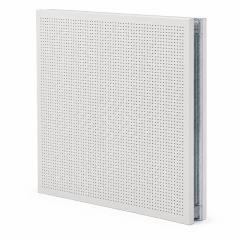
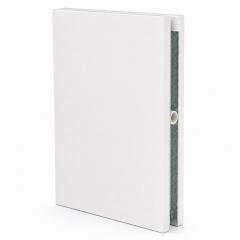
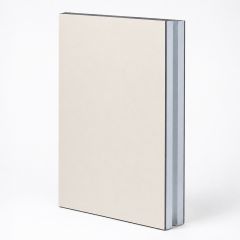
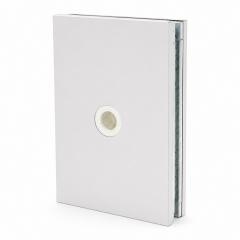
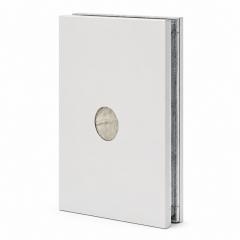
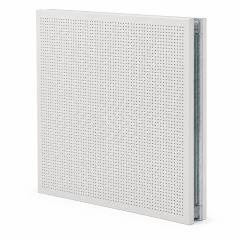
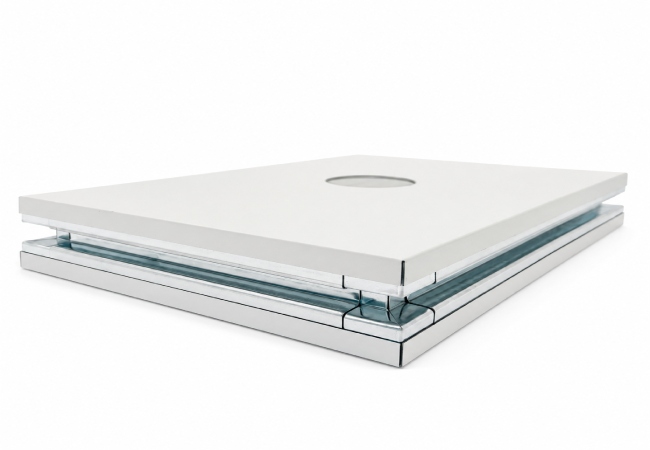
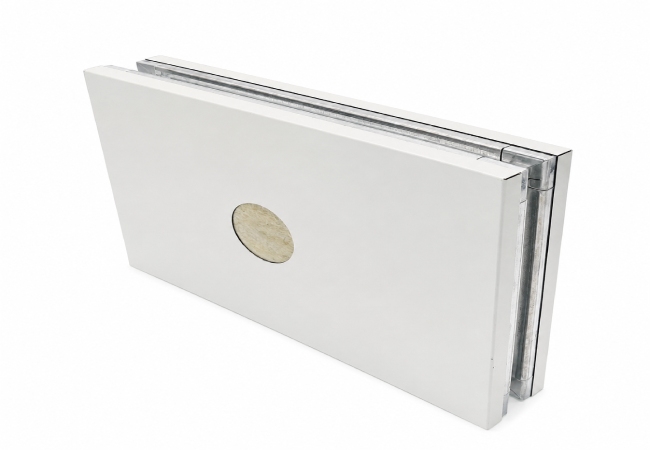
An aluminum honeycomb panel can provide high stiffness with lower weight, making it useful for large ceiling modules, tall partitions or cleanroom areas where flatness is critical. A rockwool sandwich panel is often considered when fire behavior, acoustic performance, thermal insulation and cost balance are important. Neither material is automatically better in every location; each must be matched to span, support and cleanroom risk.
| Panel strategy | Best-fit use case | Engineering check |
|---|---|---|
| Aluminum honeycomb panel | Long spans, lightweight ceiling panels and flatness-sensitive walls. | Support spacing, edge closure, face sheet thickness and opening reinforcement. |
| Rockwool sandwich panel | Fire-rated or acoustic partitions where insulation is also required. | Core density, joint compression, panel length and frame support. |
| Reinforced frame | Door openings, windows, pass-throughs and service penetrations. | Load transfer path, anchorage, corrosion resistance and removable access. |
Openings and Frames
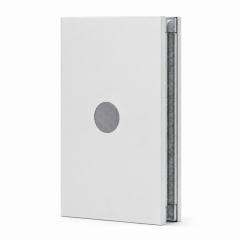
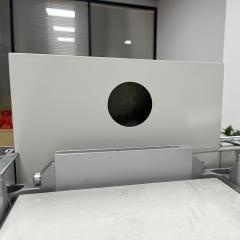
A cleanroom wall is usually strongest when it is uninterrupted. Once a door, vision window, transfer port, duct opening or cable penetration is added, the load path changes. The panel may need aluminum framing, steel reinforcement, thicker skins or a separate support frame to prevent local bending and joint cracking.
For semiconductor fabs, this matters because doors and pass-throughs often sit close to tools, service corridors and pressure boundaries. If a frame twists or settles, the gasket may lose compression. If a window module is unsupported, cleaning pressure and repeated door operation can slowly expose weak joints.
A good shop drawing should therefore show not only the panel module, but also reinforcement around each opening, anchorage points, sealant type, removable covers and inspection sequence.
Ceiling Loads
A cleanroom ceiling panel may carry only its own weight, or it may be part of a service platform with lights, filters, blank panels, access hatches and occasional maintenance loads. The distinction must be clear. Treating a non-walkable ceiling as walkable is a safety issue; treating a walkable ceiling as a generic panel is a cleanroom performance issue.
ISO 14644-3 covers cleanroom test methods such as airflow, pressure difference and recovery. A ceiling that deflects around filters, blank panels or access hatches can complicate testing and maintenance because the service plane no longer behaves consistently.
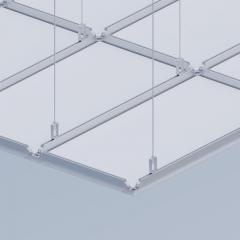
For Wonclean projects, panel selection should therefore be made together with ceiling grid spacing, hanger design, FFU positions, access hatch size and the intended maintenance approach.
Technical Fact Check
Referenced Technical Standards
FAQ
Because panel movement can stress seals, disturb pressure boundaries, affect door alignment and create ledges where particles collect.
It is useful when stiffness, flatness and lower weight are important, especially in long-span walls, ceiling panels or large modular assemblies.
It can be suitable where fire, acoustic or insulation performance is required, provided span, surface finish, joint sealing and support details are engineered correctly.
Usually yes. Openings interrupt the panel load path, so reinforcement helps control local bending, gasket compression and long-term alignment.

 Room JT30151, Building 4, Area B, No. 925 Yecheng Road, Industrial Zone, Shanghai,China
 Info@wonclean.com
Allen@wonclean.com
Joy@wonclean.com
Info@wonclean.com
Allen@wonclean.com
Joy@wonclean.com
 +86 13671979988(Allen)+86 15950938878(Joy)





 تنرتنإلا ربع ةمدخ

